


Description
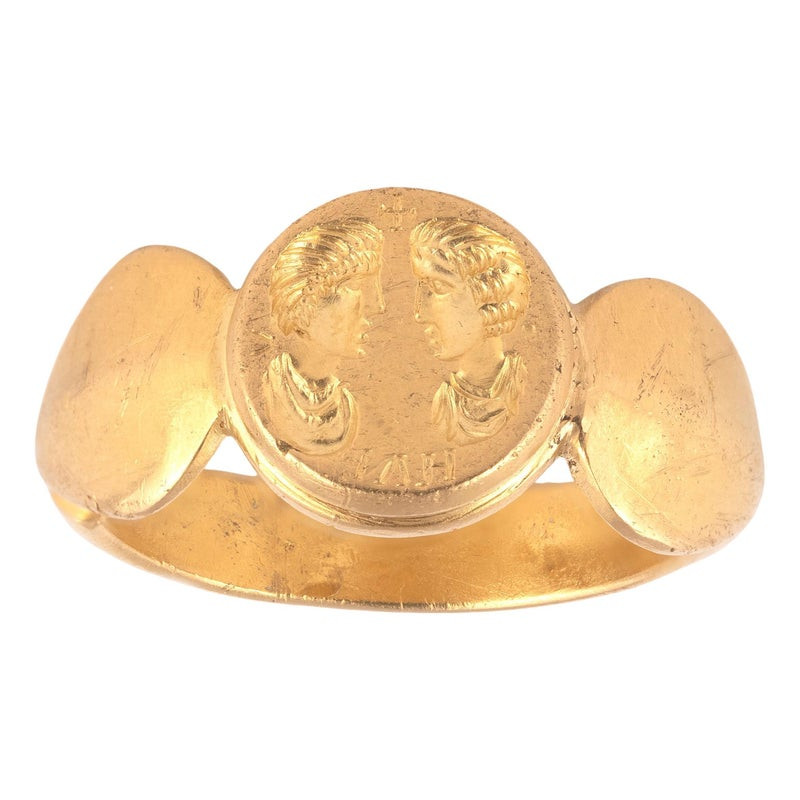
The wedding ring can be ascribed to Byzantine goldsmith production of the 6th-7th century. Made of gold, it features the embossed decoration of a couple's portrait, in which the two spouses are depicted facing each other. The ring is completed, in the centre, by a cross and at the bottom by the inscription HVI, which underline the piety of the couple and the protection of Christ. The wedding ring, therefore, is part of the tradition of wearing jewels celebrating the couple on the wedding day, according to a custom established from the end of the 4th century and continued in Byzantium until the end of the 7th century. Portraits of spouses are often generic and not particularly realistic, although more identifying details of social status are often included, which is also linked to the choice of metal: in this case, gold symbolizes the family's wealth, as it was the most precious material at the time. The ring is also completed by a teardrop-shaped frame on the sides of the stem where are signs attributable to the jewel's centuries-old history, which contribute to making it precious and unique.
Details
Period: 6th-7th century
Ring size: 8 ½
Weight: 13,75 gr
You might also like
Period: 6th-7th century
Ring size: 8 ½
Weight: 13,75 gr