


Description
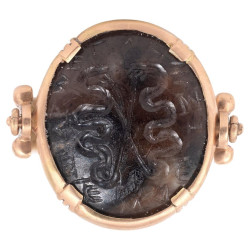
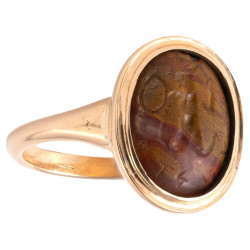
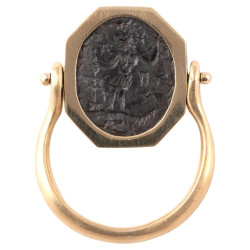
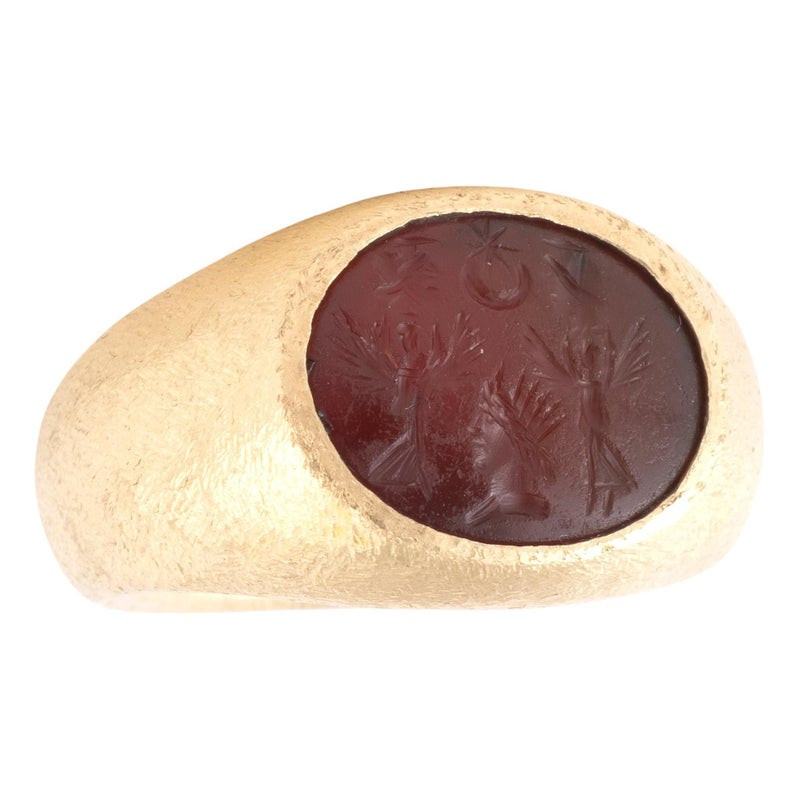
L’intaglio romano, databile attorno al II secolo d.C., è realizzato in corniola ed è incastonato in una moderna montatura in oro giallo 18 carati. L’incisione si distingue per la sua singolarità e rarità: presenta un profilo maschile adornato da una corona radiata, composta da dodici (o sei) punte acuminate, simbolo dei mesi dell’anno, tradizionalmente attribuito a divinità e figure eroiche deificate nell’antica Roma. A partire dall’epoca augustea, tale elemento diviene anche attributo degli imperatori romani, a sottolineare la loro superiorità. Ai lati della figura centrale sono raffigurate due Vittorie alate, elementi iconografici ufficiali del potere imperiale e simbolo di trionfo. Completano la scena il Sole e la Luna nella parte superiore: il Sole rappresentava eternità, forza invincibile e rinascita, collegandosi alla divinità Elios, il quale possedeva la capacità di vedere ed ascoltare dovunque; mentre la Luna, associata a Selene, era strettamente connessa ai culti funerari, ai cicli naturali e alle stagioni. Nel complesso, l’intaglio appare come un oggetto apotropaico e celebrativo, volto ad esaltare la dimensione imperiale e a conferire a chi lo possedeva protezione, fortuna e un legame simbolico sia con la vita che con l’aldilà.
The Roman carving, dating back to around the 2nd century AD, is made of carnelian and is set in a modern 18k yellow gold setting. The engraving stands out for its singularity and rarity: it presents a male profile adorned with a radiated crown, composed of twelve (or six) sharp points, symbol of the months of the year, traditionally attributed to deities and heroic figures deified in ancient Rome. Starting from the Augustan era, this element also became an attribute of the Roman emperors, to underline their superiority. On the sides of the central figure two winged Victories are depicted, official iconographic elements of imperial power and a symbol of triumph. The scene is completed by the Sun and the Moon at the top: the Sun represented eternity, invincible force and rebirth, connecting to the divinity Elios, who possessed the ability to see and hear anywhere; while the Moon, associated with Selene, was closely connected to funerary cults, natural cycles and seasons. Overall, the carving appears as an apotropaic and celebratory object, aimed at enhancing the imperial dimension and giving those who owned it protection, luck and a symbolic connection with both life and the afterlife.
Details
Period: II century A.D.
Top size: 17 mm x 15 mm
Size:8 1/4
Weight: 16.67 gr
You might also like
Period: II century A.D.
Top size: 17 mm x 15 mm
Size:8 1/4
Weight: 16.67 gr