Period: 3rd Century A.D. circa.
Size: 5
Weight: 5.51gr.
Diameter: 11 mm
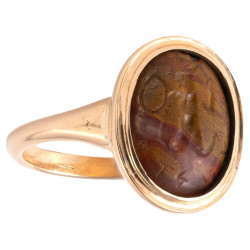
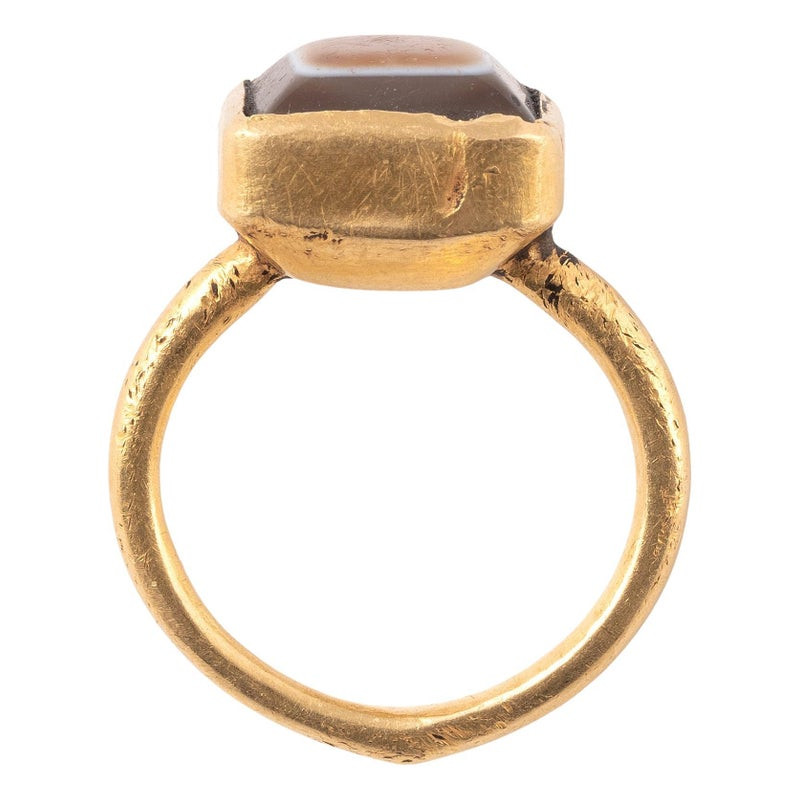
L’occhio di agata, più comunemente conosciuta con il termine anglosassone “eye agate”, consiste in una pietra di agata composta da tre strati screziati, solitamente con colori che vanno dal giallo al grigio con zone bianche intermedie, che assume una forma simile a quella di un occhio. Questa pietra, nelle culture orientali, assunse una notevole importanza a causa dei poteri curativi che le si attribuivano e, in particolar modo, si credeva che l’agata fosse in grado di curare e allontanare il malocchio e svolgere una funzione apotropaica curativa. Nel caso di questo anello colpisce la lavorazione squadrata e aggettante dell’agata, con una maestria tale da riuscire a mettere in risalto le diverse screziature della pietra e creare così un curioso gioco di tonalità. Allo stesso modo, è interessante la presenza della montatura originale dell’anello, in oro giallo, la quale è semplice e minimalista ma asseconda in maniera perfetta la forma della pietra, riuscendo così a metterla in risalto e a valorizzarla. Alla luce di ciò, eventuali segni o presenza di patina vanno considerati un valore aggiunto dell’oggetto, il quale è pervenuto in perfette condizioni dal III secolo fino ad oggi.
The agate eye consists of an agate stone composed of three mottled layers, usually with colours ranging from yellow to grey with white areas in between, which takes on a shape similar to an eye. This stone, in oriental cultures, took on considerable importance due to the healing powers attributed to it and, in particular, it was believed that agate was able to cure and ward off the evil eye and perform an apotropaic healing function. In the case of this ring, the square and projecting workmanship of the agate is striking, with such mastery that it is able to highlight the different mottling of the stone and thus create a curious play of shades. Likewise, the presence of the original ring frame, in yellow gold, which is simple and minimalist but perfectly supports the shape of the stone, thus managing to highlight and enhance it. In light of this, any signs or presence of patina must be considered an added value of the object, which has arrived in perfect condition from the 3rd century until today.


You might also like
Period: 3rd Century A.D. circa.
Size: 5
Weight: 5.51gr.
Diameter: 11 mm