Period: 1st-3rd century AD
Top size: 21 mm
Size 9 ½
Weight 18.84 gr
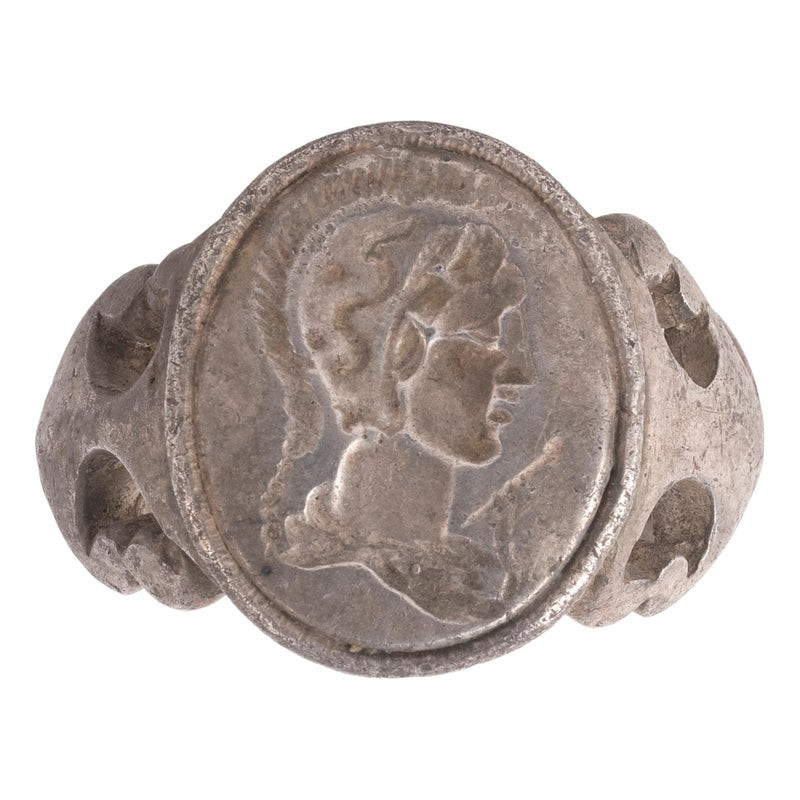
L’intaglio di produzione romana risale al I-III secolo ed è realizzato in argento con una particolare decorazione del gambo dell’anello a volute. L’intaglio, invece, rappresenta l’incisione di un volto di profilo corredato da un elmo crestato e, nella parte superiore del busto, sembra indossare un’armatura. Anticamente l’intagli erano anelli-sigilli necessari per identificarsi e autenticarsi nel caso di firme in importanti documenti, sebbene spesso fossero utilizzati altresì con scopi protettivi e talismanici. In questo caso, infatti, l’elmo crestato porta a pensare che l’intaglio raffiguri in realtà Minerva, dea romana della saggezza e della guerra condotta per giuste cause, quindi, simbolo di coraggio ma anche di regalità, prerogative di cui il proprietario dell’anello, indubbiamente, voleva essere portatore.
The intaglio of Roman production dates to the I-III century AD and is made in silver with a particular decoration of the stem of the ring with volutes. The intaglio, on the other hand, represents the incision of a profile accompanied by a crested helmet and, in the upper part of the torso, it seems to wear an armour. Formerly intaglios were signet rings necessary to identify and authenticate in the case of signatures on important documents, although they were often also used for protective and talismanic purposes. In this case, the crested helmet leads us to think that the carving actually represents Minerva, Roman goddess of wisdom and war conducted for just causes, therefore, symbol of courage but also of royalty, Prerogatives of which the owner of the ring, undoubtedly, wanted to be the bearer.


You might also like
Period: 1st-3rd century AD
Top size: 21 mm
Size 9 ½
Weight 18.84 gr