Period: 2nd century
Top size: 2,1 cm x 1,5 cm
Ring size: 8
Weight: 12,50 gr
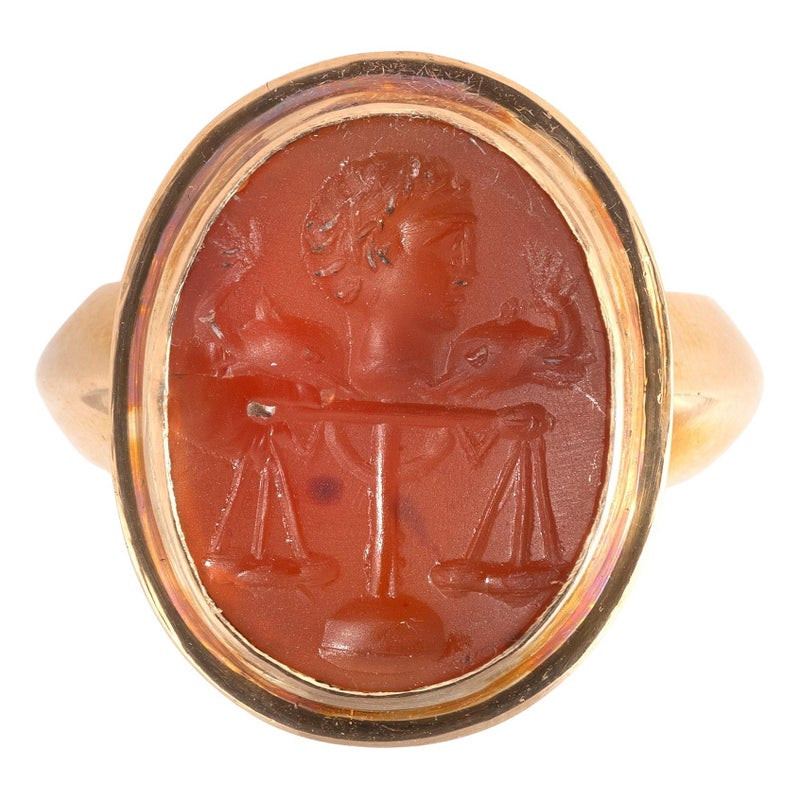
L’intaglio romano del II secolo è realizzato in corniola ed inserito in una montatura degli inizi del '900 in oro 18 carati con una scanalatura che incornicia ed esalta la pietra. La corniola, infatti, presenta una raffigurazione mitologica rara che vede al centro un volto maschile di profilo affiancato da due delfini e completato da una bilancia sottostante. Questi elementi richiamano alla mente il mito greco, ispirato da una storia vera, di Arione che fu maestro nell’arte di suonare la lira, tanto da prendere parte a una competizione musicale che gli fruttò una grande fortuna, sebbene questo suscitò l’invidia dei marinai che lo dovevano riportare a Corinto e che gli intimarono di morire. Arione chiese di poter suonare un’ultima volta e, dunque, dopo essersi posizionato a prua, si gettò in mare dove venne salvato da dei delfini richiamati dal suono soave della sua musica. I delfini, raffigurati affianco al suo ritratto nell’intaglio, lo riportarono a casa, dove poco tempo dopo arrivarono gli stessi marinai che lo avevano minacciato ma che fecero finta di non saper nulla così, dopo che Arione si presentò al loro cospetto in carne ed ossa, essi vennero giustiziati, come testimoniato dalla presenza dell’incisione della bilancia, simbolo della giustizia che ha ripagato l’avidità dei marinai stessi.
The 2nd century Roman intaglio is made of carnelian and set in a early 20th century 18 carat gold setting with a groove that frames and enhances the stone. The carnelian, in fact, presents a rare mythological depiction which sees in the centre a male profile flanked by two dolphins and completed by a scale below. These elements bring to mind the Greek myth, inspired by a true story, of Arion who was a master in the art of playing the lyre, so much so that he took part in a musical competition which brought him great fortune, although this aroused the envy of sailors who were supposed to take him back to Corinth and who ordered him to die. Arione asked to be able to play one last time and, therefore, after positioning himself on the bow, he threw himself into the sea where he was saved by dolphins recalled by the sweet sound of his music. The dolphins, depicted next to his portrait in the intaglio, took him home, where shortly afterwards the same sailors who had threatened him arrived but pretending not to know anything so, after Arion appeared before them in person, they were executed, as evidenced by the presence of the engraving of the scale, a symbol of justice that repaid the greed of the sailors themselves.


You might also like
Period: 2nd century
Top size: 2,1 cm x 1,5 cm
Ring size: 8
Weight: 12,50 gr