Period: 1820 ca.
Measurements: 4,5 cm x 3,1 cm
Length: 6,0 cm
Weight: 42.7gr.
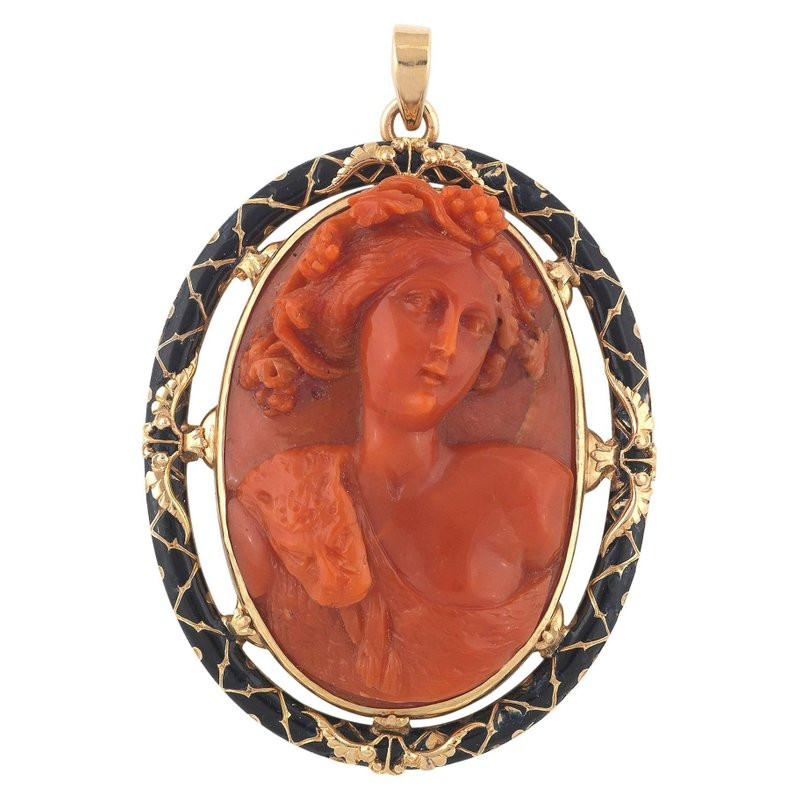
Il cammeo degli anni ’20 del XIX secolo è realizzato in Corallium Rubrum, una prestigiosa varietà tipica del mare Mediterraneo e che si contraddistingue per il colore rosso intenso. Il soggetto raffigurato può essere interpretato con un’iconografia del dio greco Dionisio, identificabile grazie ai grappoli d’uva che adornano la capigliatura, suo attributo distintivo in quanto divinità dell’ebrezza e, di conseguenza, dei piaceri lascivi e dell’istintualità. Questo aspetto è sottolineato anche dal fatto che Dionisio, in questo frangente, indossa la pardalide, ovvero la pelle di pantera, simbolo della sua connessione con l’istinto primordiale e l’irrazionalità. Particolare attenzione merita altresì la montatura in oro e smalto nero parzialmente dorato, la quale crea un fastoso contrasto con la raffigurazione centrale del cammeo e, al contempo, si pone in relazione con il verso del gioiello, dove è stata finemente incisa una natura morta: alla base del fastoso vaso rigoglioso di fiori si scorgono due animaletti, di cui un ramarro e un topolino. Oltre all’elevata qualità del corallo Rubrum, si nota l’elevata qualità incisoria con cui sono stati resi i minuziosi dettagli del ritratto di Dionisio, qualità che ha altresì permesso di restituire profondità a questa raffigurazione: la parte sommitale del volto, infatti, risulta essere più aggettante del busto, tanto che la capigliatura fuoriesce leggermente dall’ovale in cui è racchiuso, andando a sovrapporsi allo smalto nero, così da restituire un maggior naturalismo e senso scultoreo.
The cameo from the 1820s is made of Corallium Rubrum, a prestigious variety typical of the Mediterranean Sea and distinguished by its deep red colour. The depicted subject can be interpreted with an iconography of the Greek god Dionysius, identifiable by the bunches of grapes adorning his hair, his distinctive attribute as the deity of drunkenness and, consequently, of lascivious pleasures and instinct. This aspect is also underlined by the fact that Dionysius, at this case, wears the pardalis, or panther skin, a symbol of his connection with primordial instinct and irrationality. Particular attention also deserves the gold and partially gilded black enamel setting, which creates a sumptuous contrast with the central depiction of the cameo and, at the same time, is related to the reverse of the jewel, where a still life has been finely engraved: at the base of the sumptuous, flourishing vase of flowers, two small animals can be seen, including a lizard and a tiny mouse. In addition to the Rubrum coral's high quality, the engraving quality of the portrait of Dionysius is remarkable for its detailed rendering, a quality which also allowed this depiction to be given depth: the upper part of the face, in fact, appears to be more projecting than the bust, so much so that the hair emerges slightly from the oval in which it is enclosed, overlapping the black enamel, so as to restore a greater naturalism and sculptural sense.


You might also like
Period: 1820 ca.
Measurements: 4,5 cm x 3,1 cm
Length: 6,0 cm
Weight: 42.7gr.